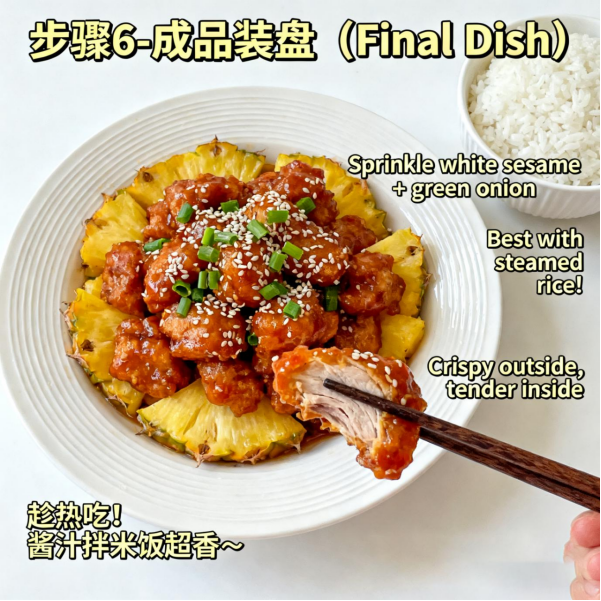


This is a classic Cantonese dish that combines Chinese and Western flavors. Tender pieces of meat are coated in a rich, sweet – and – sour sauce, paired with fresh, juicy pineapple. Each bite is sweet, sour, and refreshing, making it extremely popular whether served at a dinner party or for a family meal!
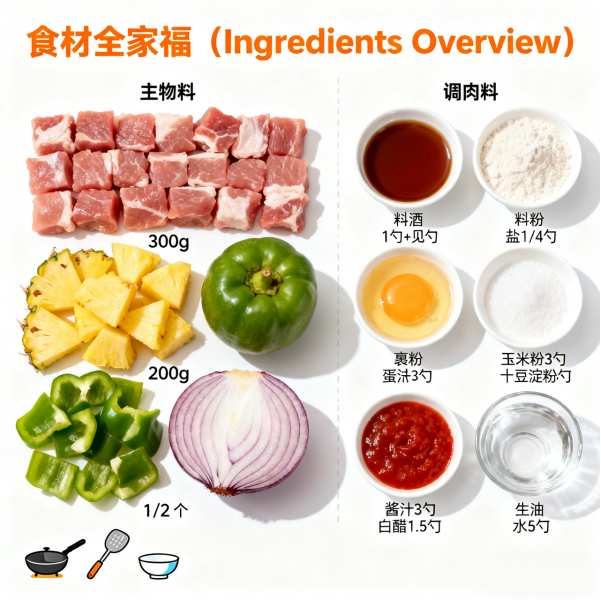
1. Ingredients (Serves 2 – 3)
Main Ingredients:
- 300 grams of pork tenderloin (Choose tendon – free tenderloin for the most tender meat; chicken breast can also be used as a substitute for a low – fat option)
- 1/4 fresh pineapple (Approximately 200 grams, select a ripe one with a yellow skin and slight give when pressed; if fresh pineapple is unavailable, canned pineapple in syrup works too, just drain the water)
- 1 green bell pepper (Cut into chunks, choose a slightly spicy or sweet variety to add crunch and color; colored bell peppers can be used as a substitute if unavailable)
- 1/2 onion (Cut into chunks, essential for enhancing flavor and aroma, cannot be omitted)
Marinade for the Meat (To Keep the Meat Tender):
- 1 tablespoon of cooking wine (For removing fishy odors, beer can be used as a substitute)
- 1/4 teaspoon of salt (For seasoning the base, do not add too much as the sauce will also contain salt)
- A pinch of white pepper (Optional, adds aroma without spiciness)
- 1 tablespoon of corn starch (Locks in moisture to keep the meat tender)
- 1 egg (Use the egg liquid to help the coating stick when dredging; water can be used as a substitute if there is no egg, but the crispiness will be slightly reduced)
Coating for Frying the Meat (Key to Crispiness):
- 3 tablespoons of corn starch + 2 tablespoons of potato starch (Using a mixture makes the coating crispier than using corn starch alone; if there is no potato starch, corn starch alone is acceptable)
Sweet – and – Sour Sauce (Proportions Are Crucial, Do Not Alter Randomly!):
- 3 tablespoons of tomato paste (Provides the base sweet – and – sour flavor; do not use tomato ketchup as it has a too mild taste)
- 2 tablespoons of white sugar (Neutralizes the sourness, can be adjusted by 1 teaspoon according to personal taste)
- 1.5 tablespoons of white vinegar (Choose brewed white vinegar; do not use rice vinegar as it has an overpowering sour taste)
- 1 teaspoon of light soy sauce (Enhances umami and adds a salty aroma, do not add too much as it will make the sauce too salty)
- 4 tablespoons of water (Adjusts the thickness of the sauce; do not add too little as the sauce may burn)
- 1 teaspoon of corn starch + 2 tablespoons of water (Mix into a starch slurry to thicken the sauce and help it cling to the meat)
2. Required Tools
- Wok (Used for frying the meat and cooking the sauce; a deep wok is recommended to prevent oil splatters)
- 2 small bowls (One for marinating the meat, and the other for preparing the sauce and starch slurry)
- Paper towels (For dabbing moisture from the meat surface to prevent oil splatters during frying)
- Slotted spoon (For fishing out the fried meat pieces and draining excess oil easily)
- Knife and cutting board (For cutting the meat, pineapple, and side ingredients)
3. Detailed Steps
Step 1: Prepare the Ingredients (Basic Preparation, Do Not Skip!)
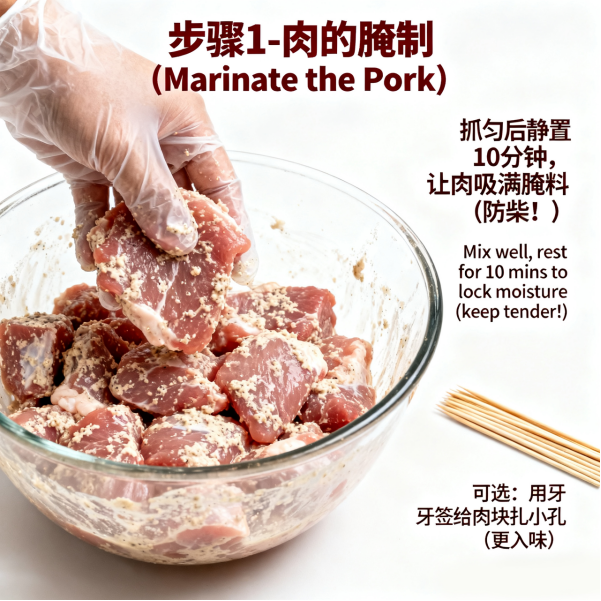
- Prepare the pork: Cut the tenderloin into 2 – centimeter cubes (Do not cut them too large, as they may not cook through; do not cut them too small either, as they may burn easily). Place the cubes in a bowl, add cooking wine, salt, and white pepper (if using). Mix well with your hands and let it sit for 5 minutes. Then add 1 tablespoon of corn starch, continue mixing until each piece of meat is coated with starch. Finally, add the egg liquid and mix well for later use (The egg liquid helps the subsequent coating adhere more firmly).
- Prepare the pineapple: Peel the pineapple and cut it into chunks of a similar size to the meat cubes. Soak the chunks in light salt water for 10 minutes (To remove the astringent taste and prevent a tingling sensation in the mouth; skip this step for canned pineapple and just drain the water).
- Prepare the side ingredients: Remove the seeds from the green bell pepper and cut it into chunks. Peel the onion and cut it into chunks. Place them on a plate for later use.
Step 2: Coat the Meat with the Coating (Key to Crispy Frying!)
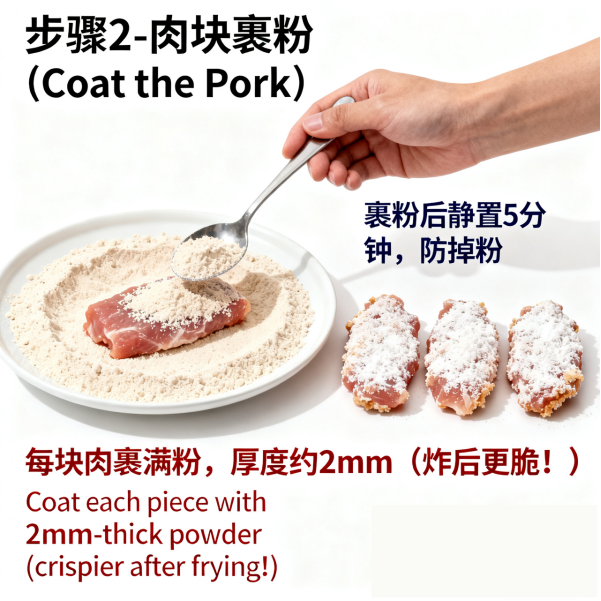
- Mix the corn starch and potato starch, and pour the mixture onto a flat plate.
- Take a marinated meat piece, place it in the starch mixture, and gently press with your hand to ensure every side of the meat is coated with a thick layer of starch (A thick enough coating ensures the meat is crispy after frying). Place the coated meat piece on another plate, and do not pile them up to avoid sticking.
- After all the meat pieces are coated, let them sit for 5 minutes (Allows the starch to absorb some moisture, preventing it from falling off during frying).
Step 3: Fry the Meat (Fry Twice for Tender Inside and Crispy Outside!)
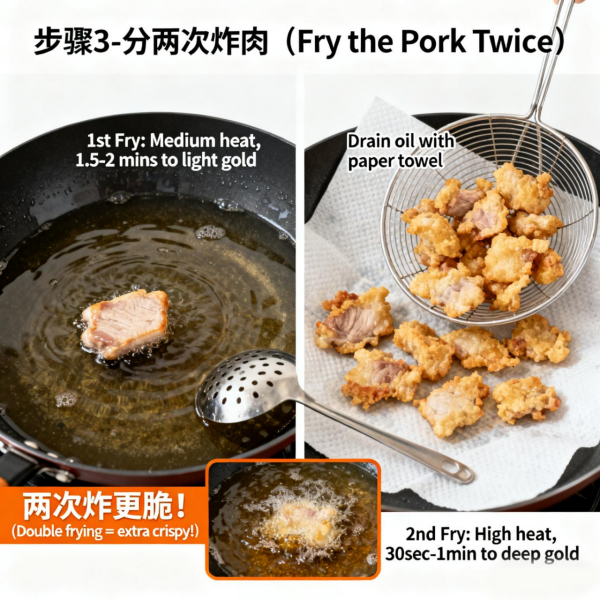
- Pour an appropriate amount of oil into the wok (The oil should cover half of the meat pieces; there is no need to fully submerge them). Heat the oil over medium heat. To check if the oil is hot enough: Drop a small coated meat piece into the oil. If it floats up quickly and small bubbles form on the surface, the oil is at the right temperature.
- Put the coated meat pieces into the oil one by one (Do not put too many at once, as they may stick together). Gently stir with a slotted spoon to ensure the meat is evenly heated. Fry for 1.5 – 2 minutes until the surface of the meat turns light golden yellow. Use the slotted spoon to take out the meat and place it on a plate lined with paper towels (To drain excess oil).
- After all the meat is fried for the first time, reheat the oil in the wok (Until light smoke rises from the oil surface). Put all the first – fried meat back into the wok and refry for 30 seconds to 1 minute until the surface turns deep golden yellow. Take out the meat and drain the oil (Refrying makes the meat crispier and also helps to remove excess oil).
Step 4: Stir – Fry the Side Ingredients + Prepare the Sauce (Key to the Sweet – and – Sour Flavor!)
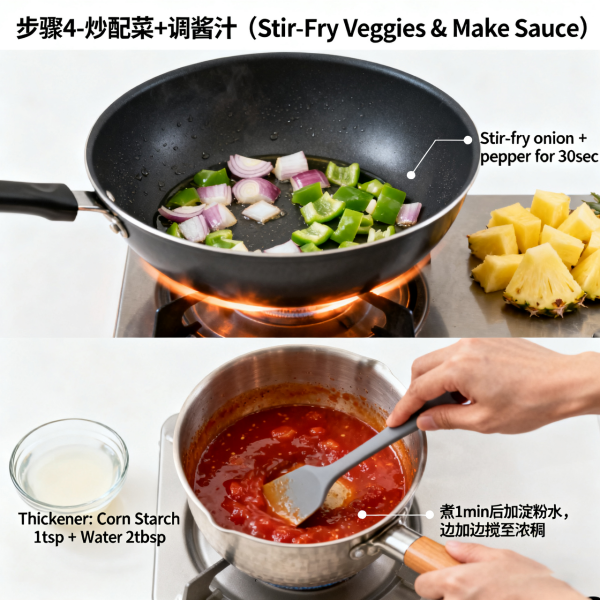
- Pour out the oil used for frying the meat, leaving 1 tablespoon of oil in the wok (Do not leave too much, as it will make the dish greasy). Turn to low heat, add the onion chunks, and stir – fry for 30 seconds until the onion becomes fragrant and soft.
- Add the green bell pepper chunks and continue stir – frying for 30 seconds until the bell pepper turns bright green (Do not stir – fry for too long, as the bell pepper will become soft and lose its crunch). Then add the pineapple chunks, stir – fry quickly for 10 seconds, and set them aside (The side ingredients only need to be half – cooked, as they will be mixed with the sauce later).
- Do not wash the wok. Directly pour in the tomato paste, white sugar, white vinegar, light soy sauce, and water. Turn to medium heat, stir well with a spatula, and cook for 1 minute until the sugar is completely melted.
- Slowly pour the prepared starch slurry into the wok while stirring continuously until the sauce thickens (Lift the spatula; if the sauce clings to the spatula without dripping, it is at the right thickness. If it is too thin, cook for another 10 seconds; if it is too thick, add 1 tablespoon of water).
Step 5: Combine and Stir – Fry (The Dish Tastes Best When Coated with Sauce!)
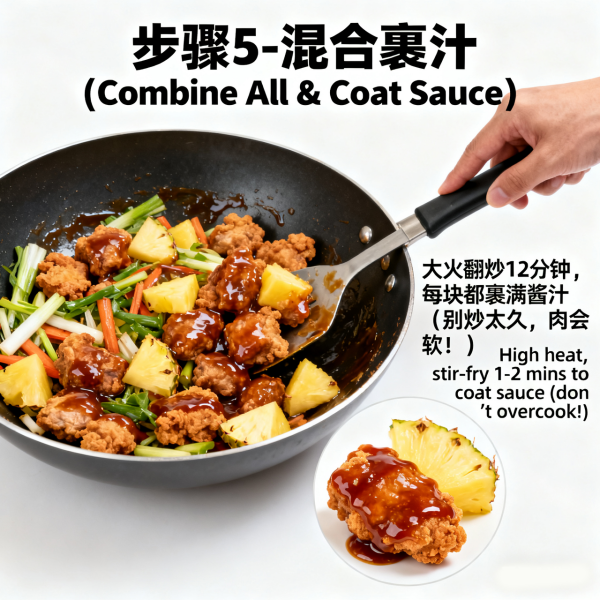
- Put the fried meat pieces, stir – fried pineapple, green bell pepper, and onion into the thickened sauce. Turn to high heat and stir – fry quickly for 1 – 2 minutes to ensure each piece of meat and each side ingredient is evenly coated with the sauce (Do not stir – fry for too long, otherwise the meat will become soft and lose its crispiness).
- Turn off the heat, directly transfer the dish to a plate, and serve it hot. The outer layer is crispy, the inner layer is tender, and the sweet – and – sour flavor is rich!
4. Tips for Success
- Secret to tender meat: Do not cut the tenderloin into too large pieces. Add starch and egg liquid during marination to lock in moisture. Do not fry the meat for too long; 30 seconds of refrying is sufficient.
- Key to a crispy outer coating: Apply a thick layer of the coating and let the coated meat sit for 5 minutes before frying. Fry the meat twice – the first fry sets the shape, and the second fry enhances the crispiness.
- Balancing the sweet and sour flavors of the sauce: The ratio of tomato paste, white sugar, and white vinegar is 3:2:1.5. Following this ratio will basically ensure a good taste. If you are afraid of sourness, add 1 more teaspoon of sugar; if you are afraid of sweetness, reduce 1 teaspoon of sugar.
- Preparing the pineapple: Fresh pineapple must be soaked in salt water to avoid a tingling sensation in the mouth. Canned pineapple should be drained of the syrup to prevent the sauce from becoming too thin.
- Substitution options: Replace pork with chicken breast (for a lower – fat option), replace pineapple with apple chunks/pear chunks (which also provide a sweet – and – sour taste), and use corn starch alone if there is no potato starch (The crispiness will be slightly reduced, but the flavor will not be affected).
- Serving suggestions: It goes perfectly with white rice! The sweet – and – sour sauce mixed with rice will make you want to have an extra bowl. It can also be served with steamed buns or noodles.