



Unrealized gains, however, are often reflected in the balance sheet under shareholders’ equity, as they affect the net worth of the company but do not contribute to the cash net income recognition always increases: flow until they are realized. Accrued income is not merely a line item on the balance sheet; it is a reflection of a company’s strategic financial management and its ability to generate sustainable earnings. By providing a more accurate measure of profitability, accrued income enables stakeholders to make informed decisions based on the economic substance of a company’s transactions, rather than merely its cash flows. As such, it is an indispensable tool for anyone seeking to understand or influence a company’s net profitability. From the perspective of a financial analyst, adjusting entries are a critical tool for fine-tuning financial statements to reflect the real-time economic value generated by a company. An auditor, on the other hand, views these entries as a checkpoint for compliance and accuracy in financial reporting.
The Standard Accounting Practice
- As of October 1, 2017, Starbucks had a total of $1,288,500,000 in stored value card liability.
- The first part of the formula, revenue minus cost of goods sold, is also the formula for gross income.
- If it sells a property at this higher value, the gain becomes realized and is recognized as income.
- This process not only reflects the current economic benefits but also aligns with various accounting standards and regulations.
From a legal standpoint, accrued income must be reported in the period it is earned, regardless of when it is received. This can affect contract law and the enforcement of agreements, as parties must understand how income is recognized and reported. Failure to properly report accrued income can lead to legal disputes and penalties. Accrued income is a critical element that affects the interpretation of financial Cash Flow Statement statements.

E. Recognizing Revenue When Performance Obligations Are Satisfied
That amount, that difference between the book value and the price that we got for the truck, needs to go to the income statement, just like the first scenario. In this case, however, it’s a credit, so that’s disclosed as a kind of revenue called “gain on disposal of assets.” Keeping the depreciation amount constant is the simplest method of depreciation, which is why so many companies depreciate their assets this way. Doing this moves another $40,000 of expense to the income statement. If cash is paid after an expense is recognized, you create a liability.

Gift Card Revenue Recognition
From the perspective of an investor, understanding when and how these gains are recognized can significantly influence investment decisions and tax strategies. For a corporation, it’s about presenting a https://chennailawyermrdp.com/2023/05/24/working-capitals-how-to-calculate-why-it-matters/ truthful financial narrative to stakeholders. At the heart of income recognition lies the concept of revenue recognition. This principle dictates how revenue is identified and documented within financial reports. Accurate revenue recognition is vital for transparent financial reporting and clarifies a company’s financial health.
Accrued Incomes Effect on Financial Statements
- Instead, the expense is incurred to generate the revenue, but the association is indirect.
- That amount, that difference between the book value and the price that we got for the truck, needs to go to the income statement, just like the first scenario.
- That means recognizing $40,000 of expense with a debit to the depreciation expense account.
- For instance, the rise of subscription-based models and digital goods has already prompted a reevaluation of how revenue is recognized over time.
- Therefore, it might only have a few accounts payable and inventory journal entries each month.
For revenue recognition, if cash is received before revenue is recognized, you create a liability. The most obvious example might be unearned revenue, also called deferred revenue. You have received money from a customer, but haven’t earned it yet. As long as you hang onto the money, you have a performance obligation, hence the liability. Once you’ve allocated the transaction price to the performance obligations, you’re then free to recognize revenue as soon as you satisfy each obligation.
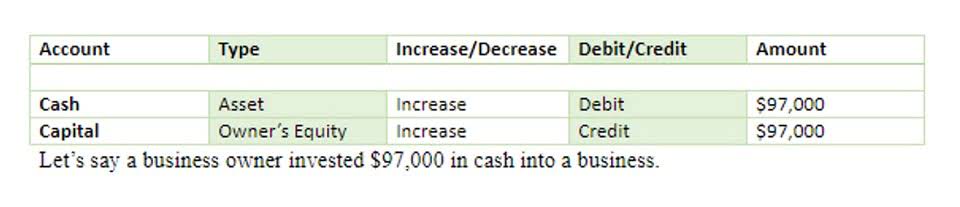
- How do we know on which side, debit or credit, to input each of these balances?
- These are the monthly management salaries and office rent and insurance premiums that are just part of the cost of running a business and are unrelated to any specific sale.
- The principle also requires that any expense not directly related to revenues be reported in an appropriate manner.
- Also, knowing when and how to determine that a gift card will not likely be redeemed will affect both the company’s balance sheet (in the liabilities section) and the income statement (in the revenues section).
- You will notice that the transactions from January 3 and January 9 are listed already in this T-account.